
guides
Fetch Email Messages and Attachments in Code
Capture and read inbound emails with MailSlurp in tests and applications. Learn message listing, content retrieval, attachments, and webhook-ready receive patterns.
Use with your tools
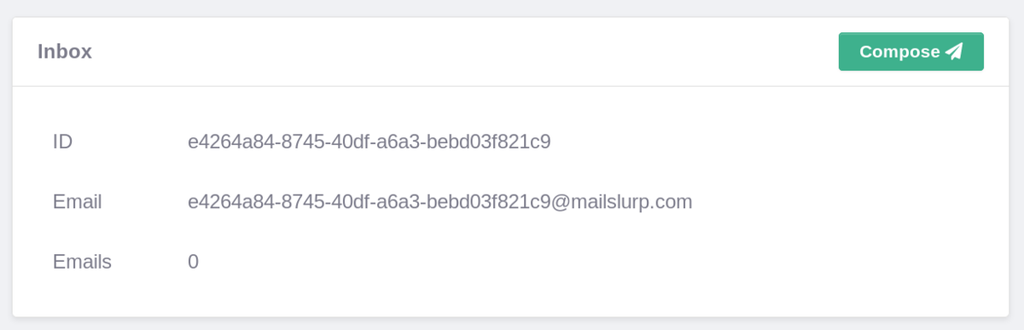
This guide explains how to read inbound email content and attachments once messages have reached a MailSlurp inbox.
For advanced receive orchestration (waitFor, webhook strategy, and CI patterns), see receive emails in code.
Step 1: capture inbound email
Create or select an inbox, then send a message to its address. MailSlurp stores inbound messages under that inbox ID.
- Inbox creation: create inboxes
- Delivery diagnostics: inbox not receiving emails
Step 2: list messages
Use inbox listing methods to retrieve message previews, then fetch full content by email ID.
Message previews are good for selecting candidates; full message fetch is required for complete body/header analysis.
Step 3: inspect content
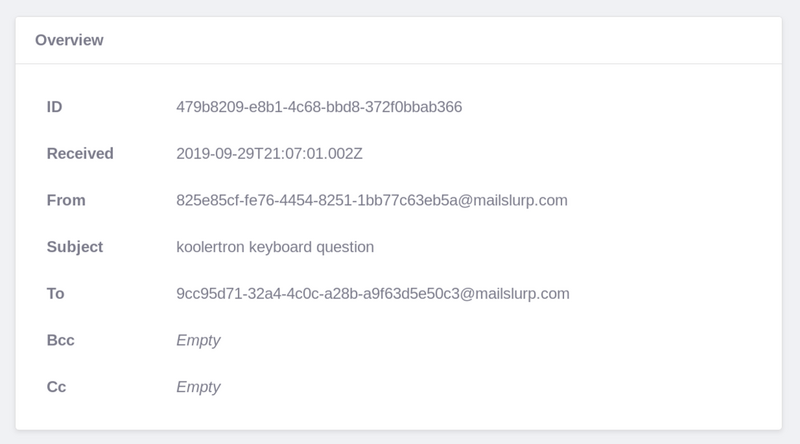
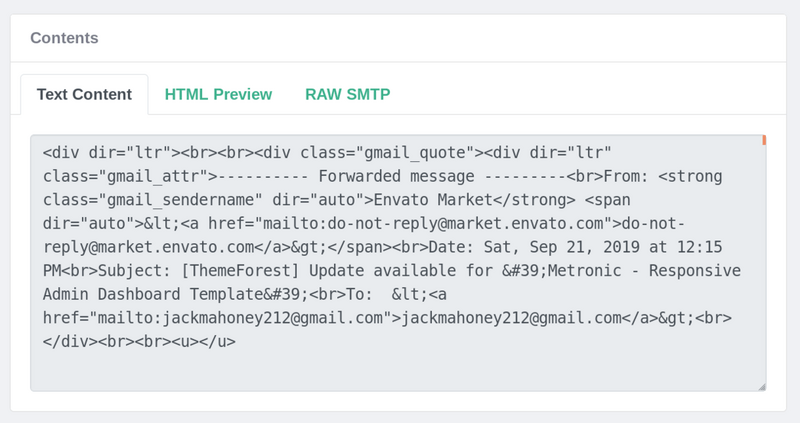
In dashboard and API workflows, you can inspect:
- Envelope and headers (
to,from,subject) - Plain text body
- HTML body
- Raw source for low-level analysis
Dashboard examples:
Step 4: retrieve attachments
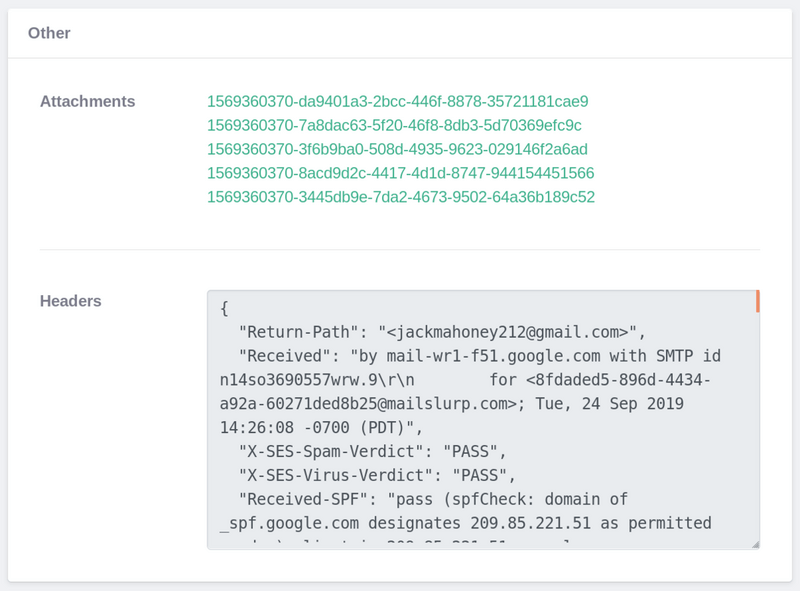
Attachments are stored separately and retrieved by attachment ID.
// download binary attachment content
downloadAttachment(emailId: string, attachmentId: string): Promise<Response>
interface AttachmentMetaData {
  contentLength: number;
  contentType: string;
  name: string;
}
Dashboard attachment view:
Step 5: verify deliverability quality
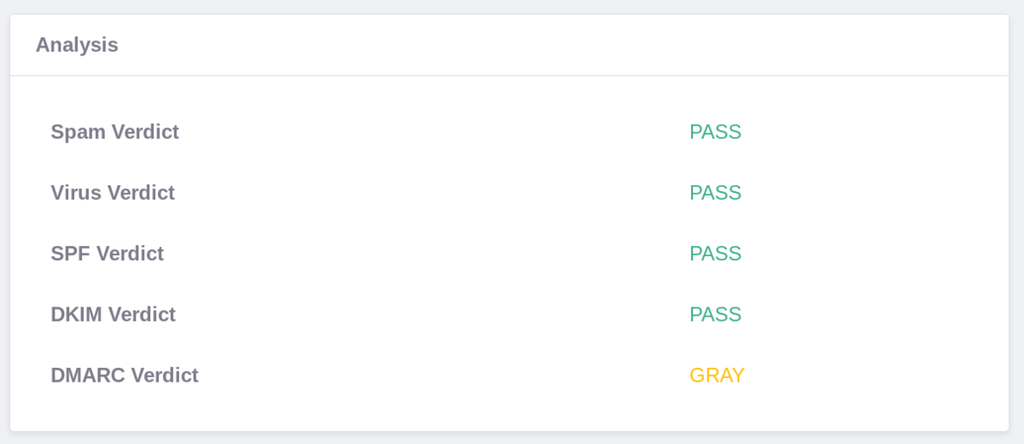
Use spam and authentication diagnostics when message quality is part of the test objective:
Dashboard analysis example:
Practical receive checklist
- Use a dedicated inbox per test or environment.
- Add timeout-aware receive assertions.
- Validate links/codes and key headers.
- Download and verify attachment MIME types.
- Track failures via webhooks for async systems.
Next step
Continue with send emails in code or build end-to-end assertions in Cypress.